Fingerprint recognition remains the most mature and widely deployed modality within the field of biometric identification. Its fundamental reliability is rooted in two key attributes: the lifelong permanence of fingerprint patterns and their extremely high uniqueness across individuals.
With the rapid evolution of security systems, smart devices, and identity verification applications (e.g., e-KYC, border control, and mobile authentication), fingerprint recognition technologies have diversified. Among them, optical and capacitive methods dominate the mainstream market, each representing distinct technical philosophies and engineering trade-offs. This article presents a systematic and in-depth comparison of these two technologies, examining their working principles, performance characteristics, security capabilities, and optimal deployment scenarios.
Ⅰ. Operating Principles: Optical vs. Capacitive
- Optical Fingerprint Recognition
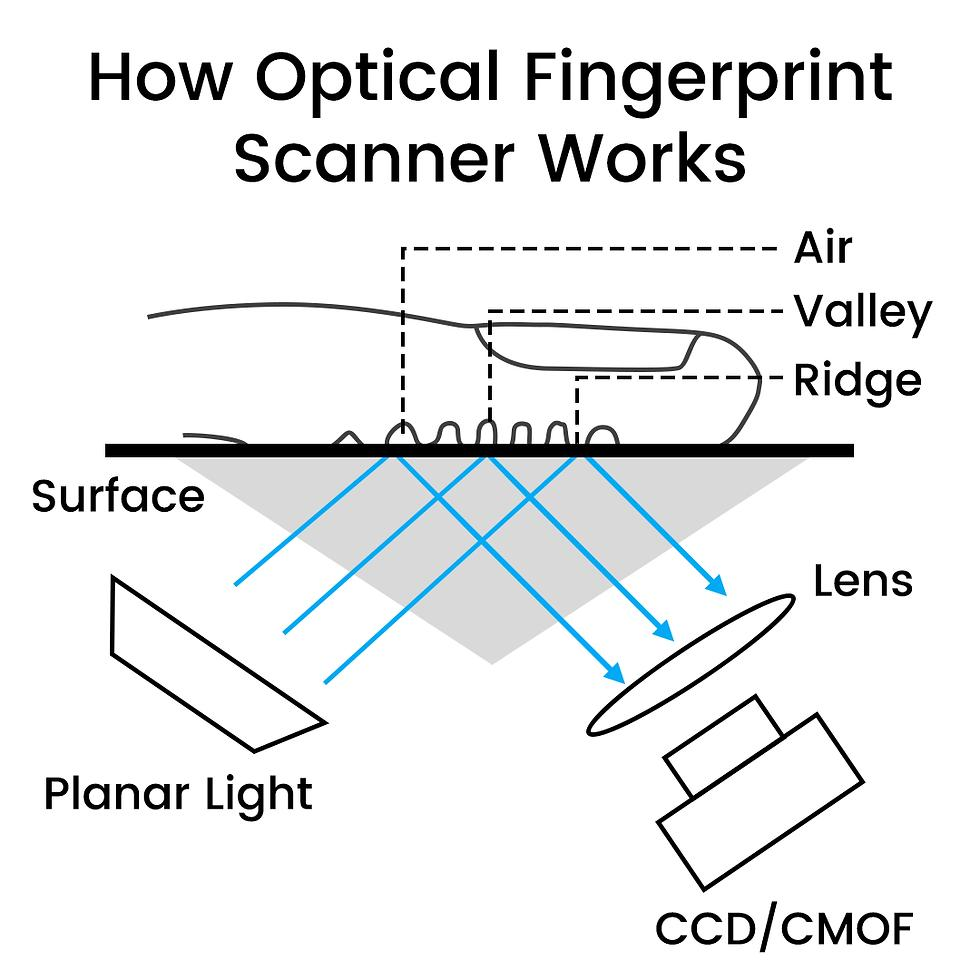
Optical fingerprint recognition is based on light reflection and image acquisition. When a finger is placed on the sensor surface:
* A built-in light source illuminates the finger.
* A prism captures the reflected light from the fingerprint surface.
* The reflected light is projected onto a CCD (Charge-Coupled Device) or CMOS sensor.
* Due to differences in reflection:
* Ridges (contact areas) absorb more light → appear darker
* Valleys (non-contact areas) reflect more light → appear brighter
This contrast forms a 2D grayscale fingerprint image, which is then processed using enhancement, binarization, and feature-extraction algorithms.
2. Capacitive Fingerprint Recognition
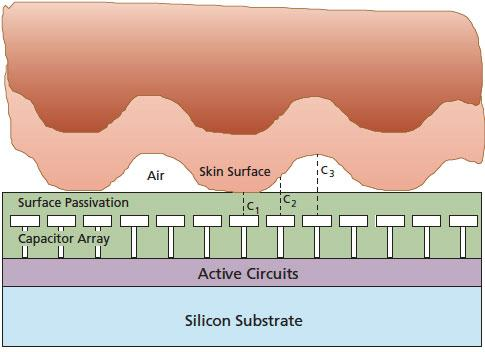
Capacitive fingerprint recognition relies on electrical field sensing and capacitance variation:
* The sensor consists of an array of microscopic capacitor cells.
* Each cell forms a capacitor with the finger acting as the opposing plate.
* When a finger touches the sensor:
* Ridges (contact areas) → higher capacitance
* Valleys (no-contact areas) → lower capacitance
* The system measures charging/discharging rates across the array.
By mapping these variations, the sensor reconstructs a high-precision digital fingerprint image, often with superior geometric accuracy compared to optical methods.
Ⅱ. Core Advantages and Limitations
|
Comparison Dimension |
Optical Method |
Capacitive Method |
|
Image Quality |
High resolution but affected by skin condition and residual prints |
High fidelity with low distortion under clean conditions |
|
Liveness Detection |
Limited (surface-level imaging only) |
Strong (detects sub-epidermal electrical properties) |
|
Security Level |
Moderate; vulnerable to spoofing |
High; resistant to fake fingerprints |
|
Environmental Sensitivity |
Sensitive to lighting and latent prints |
Sensitive to dirt, moisture, and electrostatic noise |
|
Device Size |
Larger due to optical path and prism |
Ultra-compact; ideal for embedded systems |
|
Cost Structure |
Low sensor cost but higher module complexity |
Slightly higher chip cost but simpler integration |
|
Power Consumption |
Moderate to high |
Low; suitable for mobile devices |
III. In-Depth Comparative Analysis
- Image Quality and Environmental Adaptability
Optical sensors are capable of high-resolution imaging, making them suitable for applications requiring detailed fingerprint capture (e.g., forensic-level enrollment). However, their reliance on light reflection introduces several challenges:
* Dry skin → insufficient contact → weak contrast
* Oily skin → excessive reflection → blurred images
* Residual (latent) fingerprints → ghosting and false overlays
Capacitive sensors, in contrast, are less affected by optical artifacts but introduce different constraints:
* Dirt, sweat, or conductive contaminants can distort capacitance readings
* However, when operating under clean conditions, they deliver exceptionally sharp and distortion-free images
- Security and Anti-Spoofing Capabilities
Security is one of the most critical differentiators between the two technologies:
* Optical sensors:
* Capture only surface-level ridge patterns
* Cannot distinguish between live tissue and artificial replicas
* Vulnerable to spoofing using silicone molds, gelatin prints, or lifted latent fingerprints
* Capacitive sensors:
* Detect electrical conductivity and sub-surface characteristics
* Capable of basic liveness detection
* Significantly more resistant to spoofing attacks
This makes capacitive technology more suitable for financial authentication, mobile payments, and secure identity verification systems.
- Form Factor and System Integration
Optical systems require:
* A light source
* A prism or lens system
* A minimum optical path length
These constraints result in larger modules, limiting their use in compact devices.
Capacitive sensors, built on semiconductor fabrication processes, offer:
* Extremely thin profiles (often <2 mm)
* High integration capability with PCBs and SoCs
* Seamless embedding into smartphones, tablets, and laptops
- Cost Efficiency and Power Consumption
From a system-level perspective:
Optical solutions:
* Lower raw sensor cost
* Higher total BOM due to optics and housing
* Moderate-to-high power consumption due to illumination
Capacitive solutions:
* Slightly higher chip cost
* Lower overall system complexity
* Energy-efficient, ideal for battery-powered devices
- Reliability and Long-Term Maintenance
Optical sensors may experience performance degradation over time due to:
* Surface contamination
* Scratches on the prism
* Accumulated latent prints
Capacitive sensors generally offer:
* Longer operational stability
* Lower maintenance requirements
* Better performance consistency in controlled environments
Ⅳ. Emerging Technology: Ultrasonic Fingerprint Recognition
In addition to the two technologies mentioned above, there is also ultrasonic fingerprint recognition. This technology leverages the ability of ultrasonic waves to penetrate materials; by analyzing the energy variations in the returning echoes, it constructs a 3D image of the fingerprint. While offering superior security, this method entails higher costs, slightly slower response times, and compatibility issues with certain types of screen protectors.
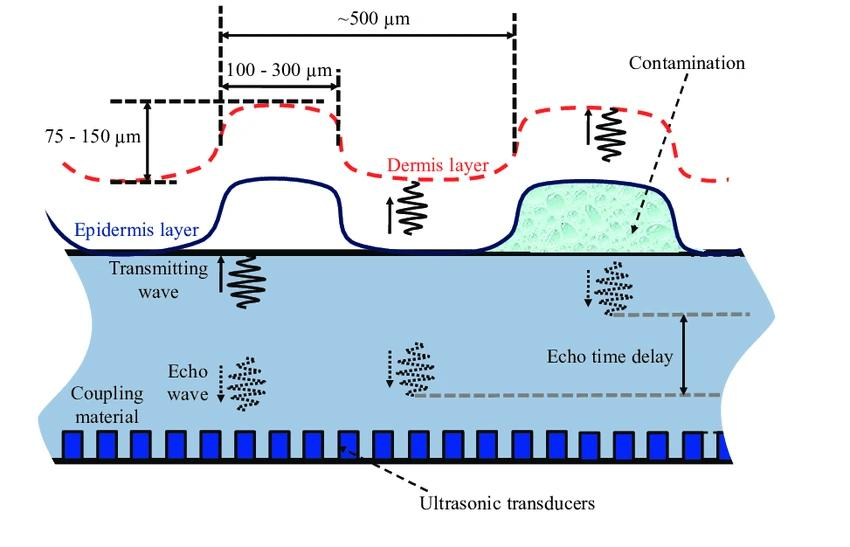
Ultrasonic fingerprint recognition represents a next-generation advancement:
* Utilizes high-frequency ultrasonic waves
* Penetrates the skin surface to capture 3D ridge structures
* Generates highly detailed depth maps
Key Advantages:
* Superior anti-spoofing capability
* Works through glass, metal, and display panels (under-display sensors)
* Less affected by moisture or contaminants
Limitations:
* Higher cost
* Slightly slower processing speed
* Sensitivity to certain screen protectors
Currently, ultrasonic technology is primarily adopted in premium smartphones and high-security applications.
Ⅴ. Conclusion and Technology Selection Strategy
The choice between optical and capacitive fingerprint recognition technologies ultimately depends on application priorities and operational constraints:
Optical Fingerprint Recognition
* Best suited for:
* Access control systems
* Time & attendance terminals
* Industrial environments with cost sensitivity
* Key strengths:
* Mature technology
* Cost-effective deployment
Capacitive Fingerprint Recognition
* Best suited for:
* Smartphones and mobile devices
* Secure authentication systems
* Financial and identity verification applications
* Key strengths:
* High security
* Compact design
* Low power consumption
In modern biometric system design, the trend is increasingly toward multi-modal authentication and hybrid solutions, where fingerprint recognition is combined with facial recognition, iris scanning, or card-based systems to achieve higher levels of security and flexibility.
By carefully evaluating factors such as security requirements, environmental conditions, integration constraints, and cost targets, organizations can select the most appropriate fingerprint recognition technology to meet their specific application needs.